Motorcycle in the Philippines – The Best Way to See the Islands
⚠️ BE WARNED: a tourist visa stamp from Philippine Immigration does not give you the ability to ride a motorcycle. If you don’t ride one back home, don’t start learning here.
I used to rent out big bikes, but I grew tired of explaining to injured tourists why they had to pay for the damage to my motorcycles. Renting a motorcycle in the Philippines is no different from renting one anywhere else, except that many drivers here are less cautious and traffic rules are not always followed.
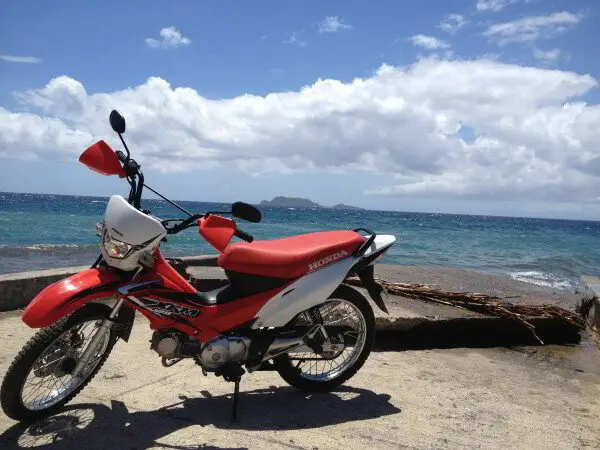
On the other hand, if you know how to ride, you’re going to love it here. Motorcycling in the Philippines is a lot of fun; it’s an experience you won’t forget. The entire city of Manila feels like a huge motocross track. You’ll dodge through traffic jams, weave between cars, and sometimes even hop onto sidewalks to avoid gridlock. It’s wild, chaotic, and endlessly entertaining. It’s a beautiful kind of madness on two wheels.
I’ve been here far too long, and I’ll admit, I’ve completely gone rogue. Traffic rules are hardly a suggestion at this point. With my feet rarely touching the ground, I race through the streets at full speed. Honestly, it’s exhilarating.
Traffic enforcement in the Philippines is hit or miss, and motorcycles often fly under the radar. Riders enjoy a level of freedom, or chaos, that larger vehicles can only dream of. You’ll see bikes speeding over sidewalks, going the wrong way down one-way streets, and weaving through traffic to get to the front. Then, as soon as the light turns green, it’s like the start of a motocross race. Engines roar, tires spin, and a cloud of two-stroke smoke fills the air.
Best story of the week: A friend of mine, who is over 70 and still rides a 650cc bike, told me the other day, “I blew through the traffic lights at Buendia, and the cops came after me on a scooter. It only took me a couple of kilometers to lose them!”
Motorcycle Rental in the Philippines
Now, let’s talk about how to rent a motorcycle in the Philippines.
1. Compare rates.
Prices can vary a lot from one shop to another, so it makes sense to ask around before deciding where to rent.
2. Inspect the bike carefully.
Check the overall condition and mileage to spot any potential issues that could cause problems later. A few minutes of inspection can save you a lot of hassle and money down the road.
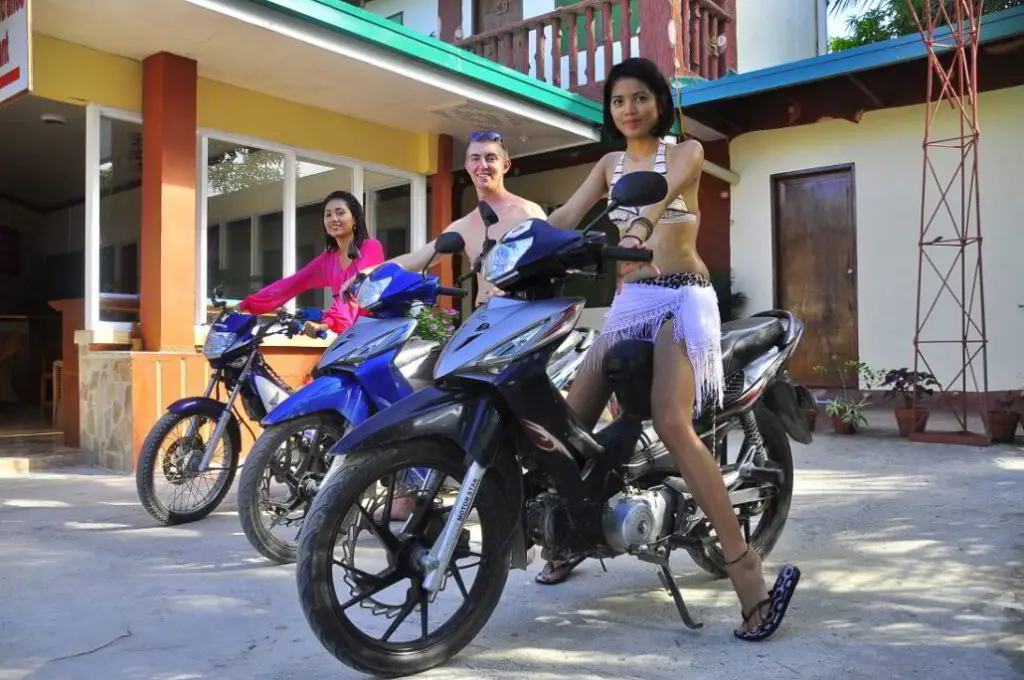
3. Pay extra for a newer bike.
It’s worth the investment. The old saying “ride it like you stole it” definitely applies here. Many rental bikes have been ridden hard and put away wet. Combined with poorly maintained roads, that wear and tear can turn a simple ride into an adventure you didn’t sign up for. In many areas, the road conditions can be more challenging than the traffic.
4. Choose a bike that matches your skill level.
This is not the place to learn how to ride or to test new tricks. The Philippines doesn’t have the wide highways and open intersections you might be used to in Western countries. If you’re not already a confident rider, don’t plan to learn here. It’s simply not worth the risk.
Before You Ride Off
Always take photos or a video of the motorcycle before leaving the rental shop. Capture every visible scratch, dent, or bit of damage, and make sure the owner sees you doing it. This simple step can save you from arguments and extra charges when you return the bike.
If you happen to drop the bike, get it repaired before returning it. It’s usually much cheaper to fix it yourself than to let the rental shop handle it; they’ll almost always charge extra for the inconvenience.
Check the fuel level before you go. Some rentals come with a full tank that must be returned full, while others are nearly empty and require you to fill up immediately. Here’s a common trick: when they show you the gas gauge, the bike is often on its side stand, making it look like there’s more fuel than there actually is. Stand the bike upright and check again; chances are, the fuel level will drop noticeably.
About helmet laws: enforcement is inconsistent. Sometimes it depends on the location or whether the local police are out meeting their monthly quota. Foreigners are often easy targets. I once asked an officer why I was getting a ticket while locals rode by without helmets. His answer? “They have no money to pay the fine.”
So yes, as a foreigner, you’re much more likely to be fined simply because they know you can pay.
Some Helmet Tips
When it comes to helmets, make sure yours fits properly and that the strap and buckles work. Rules vary from place to place. In some areas, only the driver must wear one, while in others, it’s only the passenger, and sometimes both.
Interestingly, in Puerto Galera, you’re currently not allowed to wear a helmet at all. With elections approaching, the mayor fears that someone in a full-face helmet might pull up and… well, you get the idea. Sadly, it’s a valid concern here.
On the Road
Always look both ways. Traffic patterns can change without warning. It’s not unusual to see bikes heading the wrong way down a one-way street, hopping sidewalks, or ignoring every rule in the book. Ask me how I know! The golden rule is to expect the unexpected, because most drivers here are on their own mission.
Passengers & Cargo
I’ve never seen or heard of any strict rules about how many passengers or how much cargo a motorcycle can carry. It seems to be up to the rider’s discretion, until you’re a foreigner. Rest assured, there are laws somewhere, and they’ll be enforced when it comes to you.
Despite the chaos, riding a motorcycle in the Philippines can be a lot of fun. With a little caution and planning, it’s one of the best ways to explore the country. You’ll enjoy open roads, scenic views, and total freedom.
If you’d like more information about motorcycling in the Philippines, need advice on renting or buying a bike in Puerto Galera, or just want to share stories, drop by BADLADZ Beach Resorts. We’ll be happy to help you out.
Cheers!
Sean